From Repair Patches to Visible Mending
Visible mending can extend a garment’s useful life while turning wear into a design choice. Choose a repair style that suits the fabric and the damage.
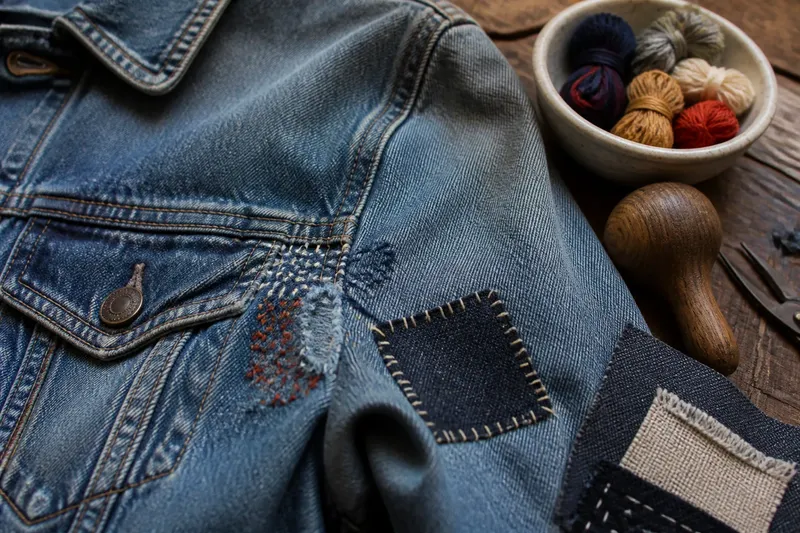
The common mistake with a worn garment is to treat every repair as something that should disappear. That can mean spending time matching thread and fabric for a patch that will still show, or leaving a small tear until it grows. Visible mending offers another choice: repair the cloth in a way that is meant to be seen, and decide whether that suits the garment before picking up a needle.
Visible mending is not one technique with a single look. It includes patches, darning, embroidery and other ways of reinforcing damaged cloth while letting the repair contribute to its appearance. Its appeal is practical as well as visual: a sound repair can keep a useful garment in circulation, while its visible character may make an old mark feel intentional rather than merely tolerated.
Why did visible mending move beyond the hidden patch?
For a long time, many everyday repairs aimed to restore a garment as quietly as possible. A patch could be placed inside a tear, thread chosen to resemble the original cloth, and stitches kept small. That approach still makes sense when a neat, unobtrusive finish matters. Visible mending broadens the brief: the repair does not need to pretend the damage never happened.
The shift is not a simple story of one old method being replaced by a new fashion. Mending has always been shaped by available materials, time and the purpose of the item. A discreet darn, a contrasting patch and decorative stitching all belong to the larger habit of making worn fabric useful again. What changes is the intention: visible stitches may be arranged as a pattern, and a patch may be chosen for contrast rather than camouflage.
That does not make every conspicuous repair durable, or every hidden one dull. Appearance and strength are separate decisions. A decorative design still needs to hold the damaged area securely, and a discreet repair can be beautifully considered. The useful question is not whether a repair looks fashionable, but whether its construction suits the fabric and the way the garment is worn.
Which repair fits your situation?
Start with the garment’s job and the condition of the cloth around the damage. A tear in sturdy denim behaves differently from a hole in a fine knit; a patch on a bag that rubs against a desk has different demands from stitching on a cardigan. Visible mending works best when the repair style responds to those details rather than imposing one look everywhere.
- Choose a visible patch when the damaged area is broad enough to need support, especially on relatively sturdy fabric. The patch can contrast in colour or texture, but its edges and attachment need to suit the cloth beneath it.
- Choose darning when a smaller hole or thinning patch can be rebuilt with interlaced stitches. It is often a natural choice for knits, where a rigid patch could feel awkward, though the yarn and stitch pattern should be compatible with the garment.
- Choose decorative stitching over a stable tear when the edges can be brought together without pulling the surrounding fabric out of shape. Embroidery can make the repair visible, but it is not a substitute for reinforcing weakened cloth.
- Choose a discreet repair when a visible patch would catch, rub or clash with how the garment is used. Visibility is an option, not a moral improvement over a quiet fix.
Imagine you have a denim jacket with a small tear near a pocket. If the cloth around it remains firm, you might stabilise the tear and add a contrasting stitched motif; the expected result is a repaired area that reads as deliberate without covering the whole panel. If the fabric around the tear is fraying too, a patch that spreads support beyond the weak spot is a more sensible starting point.
What should you check before choosing a style?
Look at the fabric, not only the hole. Gently inspect the area around the damage for thinning, loose weave, pulled loops or brittle edges. A patch attached to cloth that is already failing may simply move the strain to its border. Think of it like putting a new handle on a paper bag: the handle may be sound, but the material holding it still has to bear the load.
Then consider movement and contact. Knees, elbows and pocket edges bend or rub; a cuff may be caught by a bag strap; a seat panel meets chairs. Raised embroidery or thick patch edges can feel uncomfortable or snag in these places. A flatter repair may be more suitable where the garment is in frequent contact with skin or other surfaces.
Colour and texture matter, but so does maintenance. A hand-sewn patch may need different care from the original garment, and some yarns or fabrics can shrink, bleed colour or distort under washing. Check the garment’s care information and the material maker’s guidance before choosing supplies or a cleaning method. If the cloth is valuable, delicate or structurally compromised, a professional textile repairer can help assess it.
How do you make the repair look intentional?
Intentional does not have to mean elaborate. A limited palette, repeated stitch shape or patch fabric that echoes another detail can make a repair feel connected to the garment. Conversely, a single bright contrast can be enough. Trying to make every repair match a coordinated design may turn a practical job into an unpaid internship for your own wardrobe.
Keep the damaged area’s scale in view. A tiny cluster of stitches can look balanced on a small hole, while a broad worn patch may need a larger piece of fabric and a simpler border. Avoid pulling stitches tight enough to pucker the cloth. The repaired section should lie comfortably and move with the surrounding fabric.
Materials can come from fabric scraps, leftover yarn or thread, provided they suit the garment’s weight and care needs. A fine cotton patch may be a poor partner for heavy denim, just as bulky wool yarn can overwhelm a light knit. A contrasting colour is a visual choice; compatible weight and behaviour are functional ones.
What questions help settle the choice?
Can visible mending work on knitwear?
Yes, darning or compatible yarn can rebuild a small worn area while following the knit’s structure. A rigid patch may feel stiff on a stretchy garment, so consider how the repair will move before settling on a material.
Does a visible repair need to be decorative?
No. A clearly visible patch or plain reinforcing stitches count even if they form no motif. Decoration is one way to treat the repair as part of the garment’s appearance, not a requirement for making it useful.
When is a hidden patch the better choice?
It may suit a garment where raised stitching could snag, irritate the skin or distract from a setting where you prefer a quieter finish. A discreet repair still needs to support the damaged fabric rather than merely conceal it.
Can a patch fix fabric that is thinning over a large area?
It can help if the patch reaches sound cloth and is attached in a way suited to the garment, but extensive weakness may call for broader reinforcement or professional advice. If the surrounding fabric continues to give way, a small decorative cover will not address the underlying wear.
When does visible mending make sense?
Visible mending makes sense when you want to keep using a garment, the repair can be made sound for its intended use, and you are comfortable with the result being noticeable. It may be especially satisfying on work clothes, denim, knitwear or other well-used pieces whose marks already tell a story of ordinary wear. The repair need not be precious; it needs to be suited to the cloth.
If you are deciding between patching, darning and stitching, first identify whether the damage is a hole, a tear or thinning fabric. Then judge how much movement and rubbing the area receives, and whether the surrounding cloth is strong enough to hold a repair. Choose the least complicated method that meets those needs and gives you an appearance you can live with.
That is the useful promise of visible mending: not that a garment returns to its untouched state, but that wear can be answered with a repair that is both practical and plainly part of its design. A sound patch or darn can extend the garment’s use, while its visible character makes the decision to keep it easy to see.